
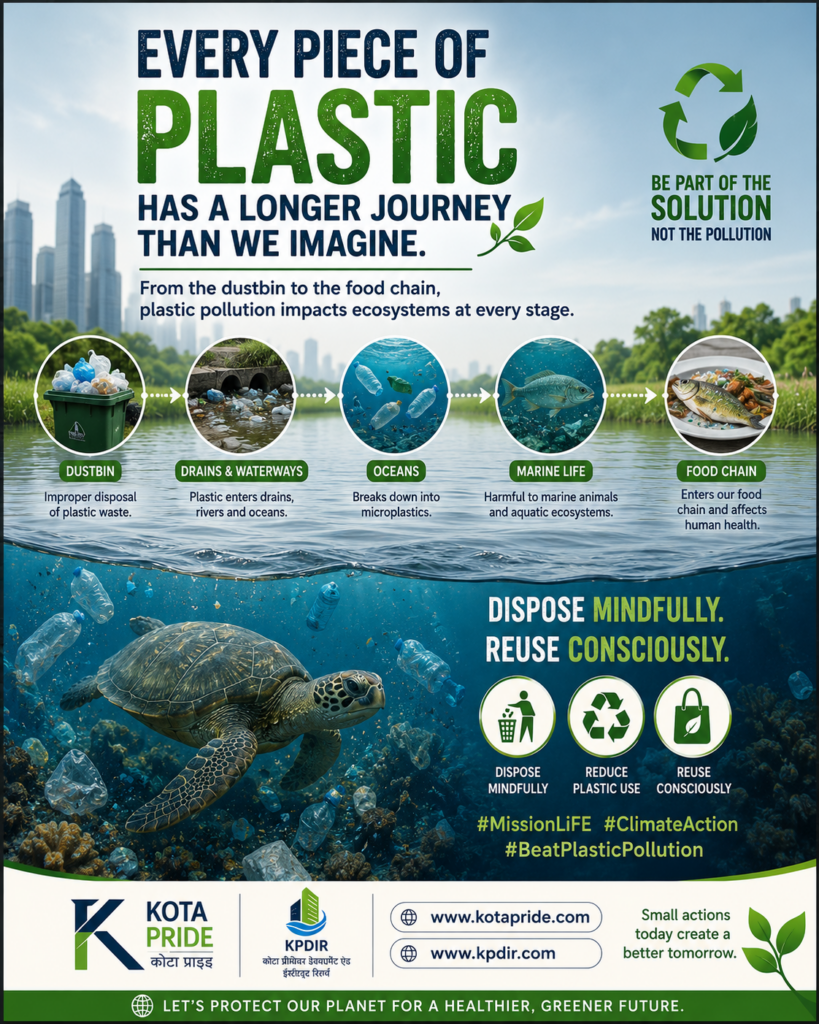
Beat Plastic Pollution: Every Piece of Plastic Has a Longer Journey Than We Imagine
Plastic has become a part of our everyday lives. From shopping bags and water bottles to packaging materials and disposable products, plastic is everywhere. But what many people fail to realize is that every piece of plastic thrown away begins a long and harmful journey that affects our environment, wildlife, oceans, and even human health.
Plastic pollution is no longer just a waste management issue — it has become a global environmental crisis.
The Hidden Journey of Plastic Waste
When plastic is carelessly disposed of, it does not simply disappear. Instead, it travels through drains, rivers, lakes, and oceans, breaking down into tiny particles called microplastics.
These plastic particles enter marine ecosystems, harm aquatic animals, contaminate soil and water, and eventually enter the human food chain through seafood, drinking water, and agricultural systems.
From the dustbin to the food chain, plastic pollution impacts ecosystems at every stage.
The Environmental Impact of Plastic Pollution
Plastic waste creates serious environmental damage, including:
- Pollution of oceans, rivers, and land
- Harm to marine animals and birds
- Soil contamination
- Blockage of drainage systems
- Increase in microplastic contamination
- Threats to biodiversity and ecosystems
- Long-term health risks for humans
Many plastic materials take hundreds of years to decompose, making the problem even more dangerous for future generations.
Small Actions Can Create Big Change
Every individual has the power to reduce plastic pollution through responsible habits and conscious choices.
Dispose Mindfully
Always throw plastic waste into proper recycling bins and avoid littering public spaces, roads, rivers, and natural areas.
Reuse Consciously
Use reusable bags, bottles, containers, and eco-friendly products instead of single-use plastics.
Reduce Plastic Consumption
Choose sustainable alternatives like cloth bags, steel bottles, paper packaging, and biodegradable products whenever possible.
Support Recycling
Segregate waste at home and support recycling initiatives that help reduce environmental burden.
Why Climate Action Matters
Plastic pollution is directly connected to climate change. The production and disposal of plastic generate greenhouse gas emissions that contribute to global warming and environmental degradation.
By reducing plastic usage, we not only protect ecosystems but also support climate action and sustainable development goals.
Move Towards a Cleaner Future
Creating awareness is important, but action is what truly makes a difference. Governments, businesses, schools, organizations, and individuals must work together to reduce plastic waste and build environmentally responsible communities.
Every conscious decision today can help create a cleaner, greener, and healthier tomorrow.
Dispose mindfully. Reuse consciously.
#MissionLiFE
#ClimateAction
#BeatPlasticPollution

Leave a Reply